A North East where women & girls are equal, represented, and valued.
We maximise the potential of women and girls by influencing decision makers, promoting need, and upholding democracy in the North East.
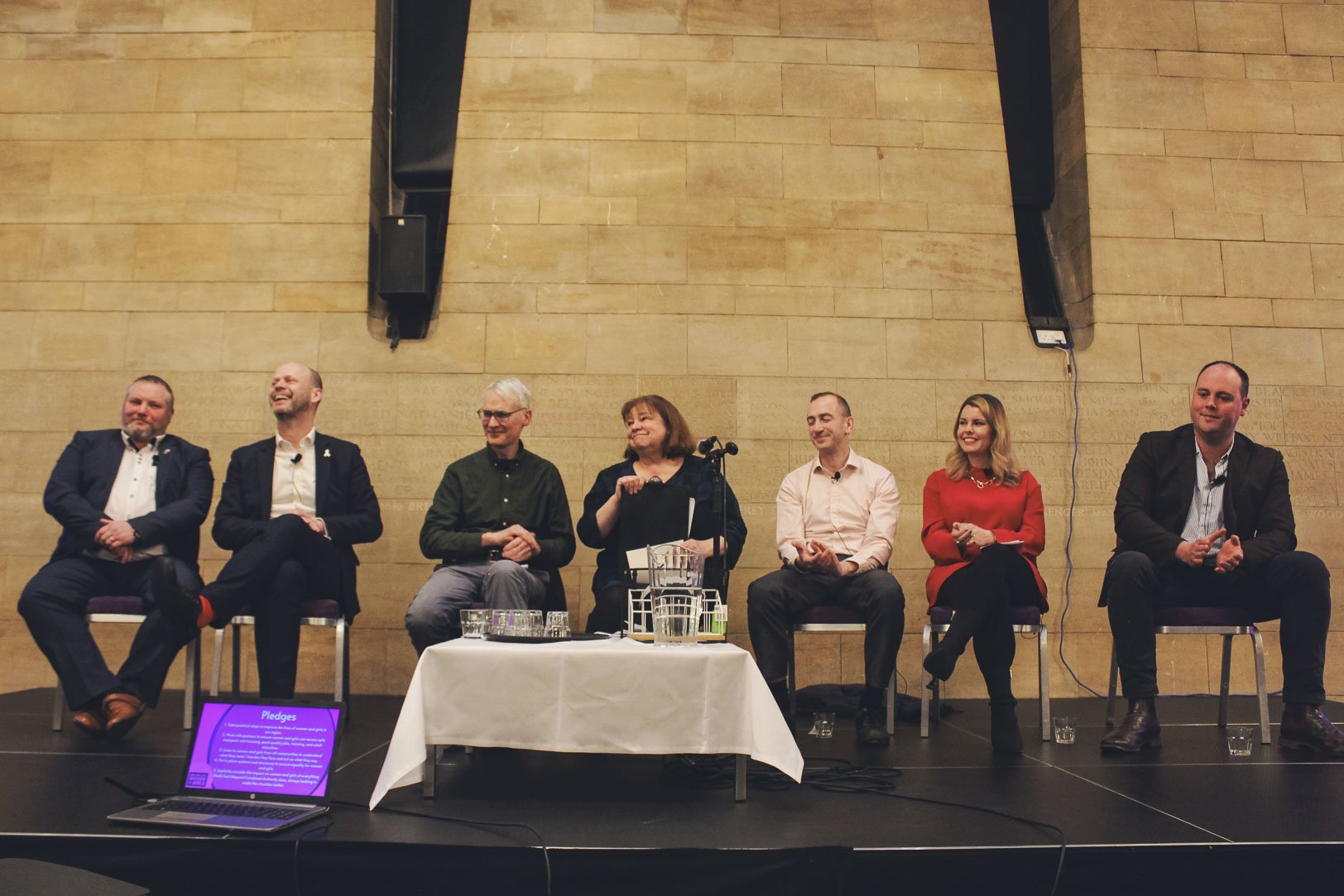
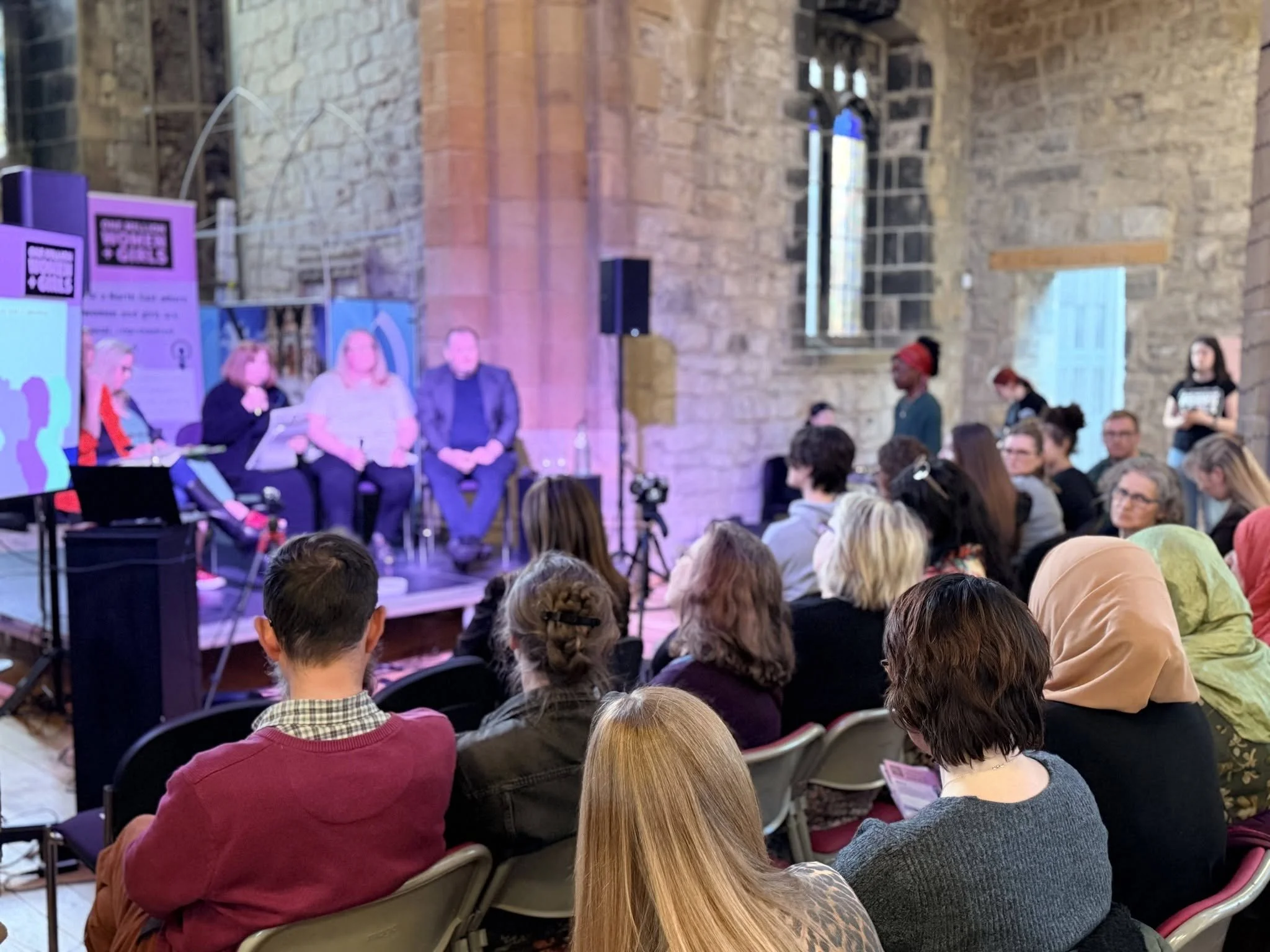
Ahead of this year's local authority elections in May, we hosted a series of local debates in Gateshead, Sunderland, Newcastle, South Tyneside and North Tyneside. At each event, up to six local councillor candidates or representatives from across the political spectrum were invited to tell us what practical steps they would take to improve the lives of the one million women and girls living in their area.
Thank you to Jacqui Hodgson, former BBC politics journalist, for chairing the discussions and to all of the women and girls who submitted and asked questions during the debates. Over 370 of you attended one of the events with a further 960 watching the live stream or a recording afterwards. For more information about the events go to: May 2026 Debates
2026 Local Election events
Why One Million Women & Girls?
One Million Women & Girls is a campaign organising to bring the voices of women and girls into local and regional government and decision making processes in the North East, which is home to approximately one million women and girls.
Why is it important?
The North East Combined Authority (NECA), and the seven local authorities it is made up of, are responsible for the aspirations and life chances of over one million women and girls living in our region.
Policy makers often think women and men use public services in the same way, but they don't, and women and girls pay the price. We’re working to change that!
Considering the specific needs of women and girls from the beginning results in better policy making, that works for everyone.
When women and girls are equal, everyone benefits.
Our Vision
A North East where women & girls are equal, represented, and valued.
Our Mission
We maximise the potential of women and girls by influencing decision makers, promoting need, and upholding democracy in the North East.
Our Story
In 2022, some local women saw the new North East Combined Authority as an opportunity to promote better policies that work for women and girls. We formed the One Million Women and Girls campaign, aiming to ‘maximise the potential of women and girls in the North East’. The new Combined Authority was to cover seven local authorities (Durham, Gateshead, Newcastle, North Tyneside, Northumberland, South Tyneside and Sunderland) with a population of just over two million people – hence the campaign name.
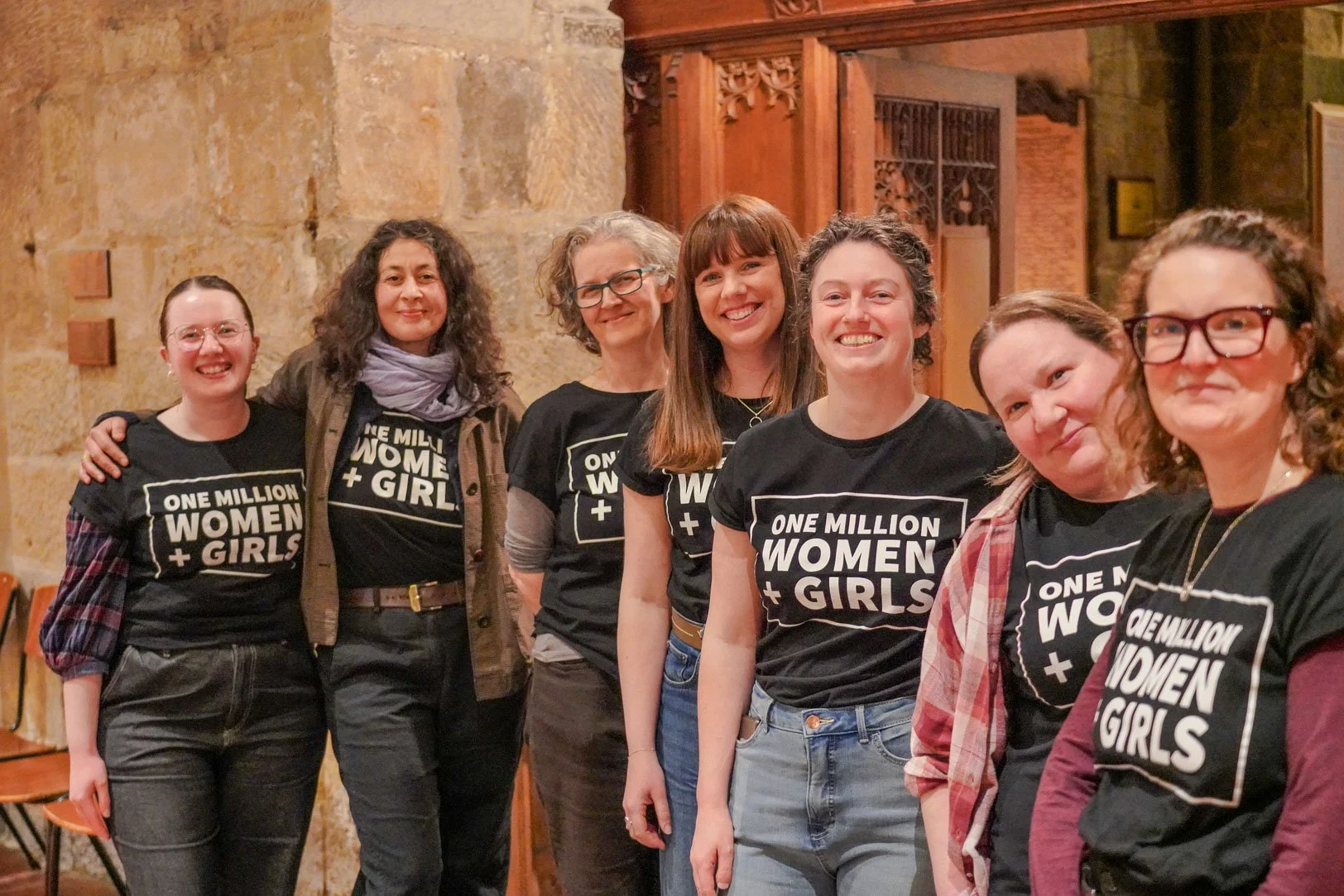
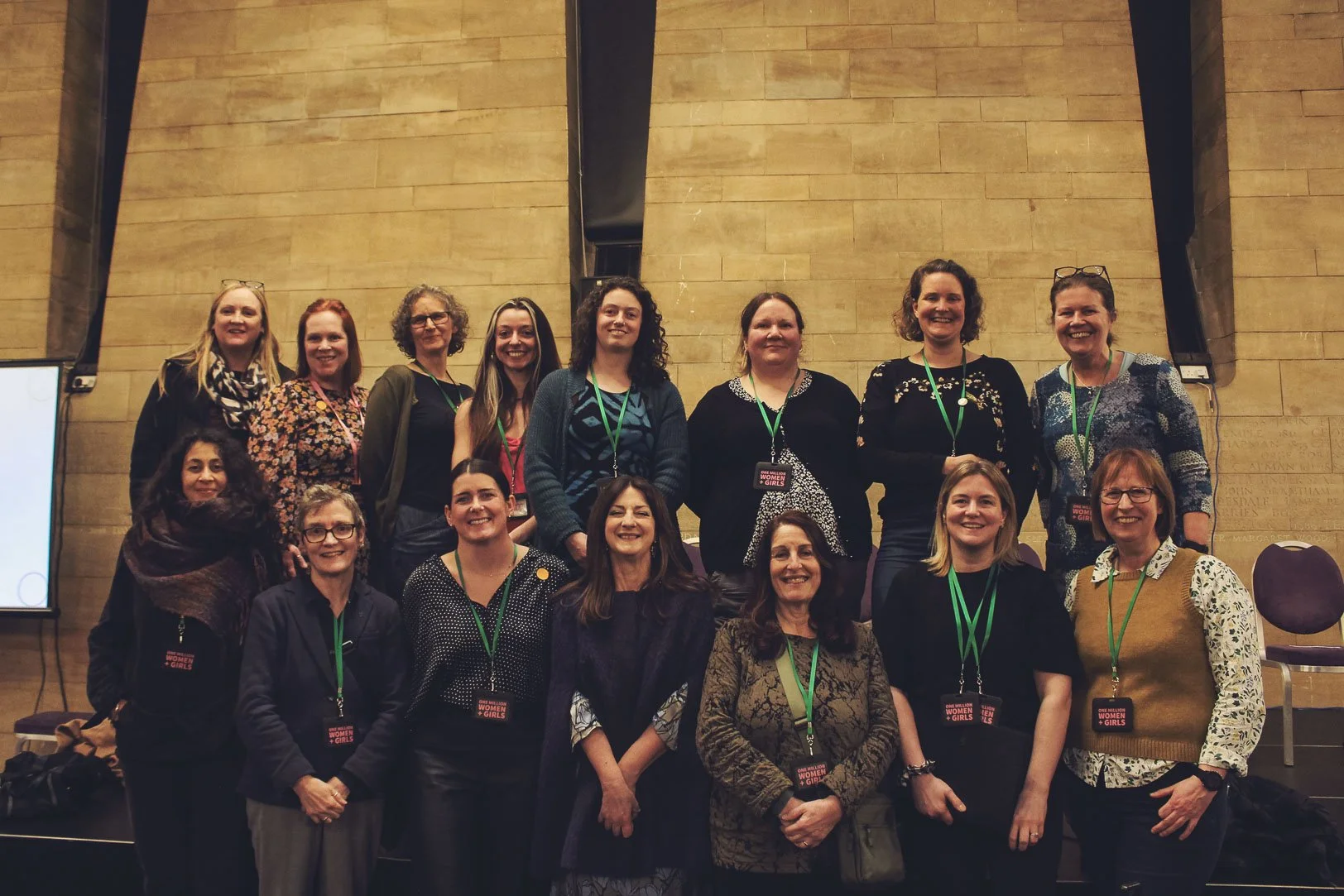
The campaign took a cross-party approach and was unfunded initially. Lots of us worked or volunteered in the voluntary and community sector but academics, public health specialists, grant-makers, students, councillors and retirees were also involved and we are always open to new members.
We thought it would be easier to influence the Combined Authority when it was being set up and knew politicians are in listening mode when seeking to be elected, so we set about lobbying the Mayoral candidates and the individual local authorities.
Rather than identify specific policies e.g. childcare, we focused on governance – we wanted lasting change with the needs of women and girls being understood and responded to in all areas. We asked for: senior leadership to ensure buy-in; a comprehensive toolkit and methodology; a commitment to building intersectional gender competence and to collect and share data disaggregated by gender; concrete action on accountability and representation.
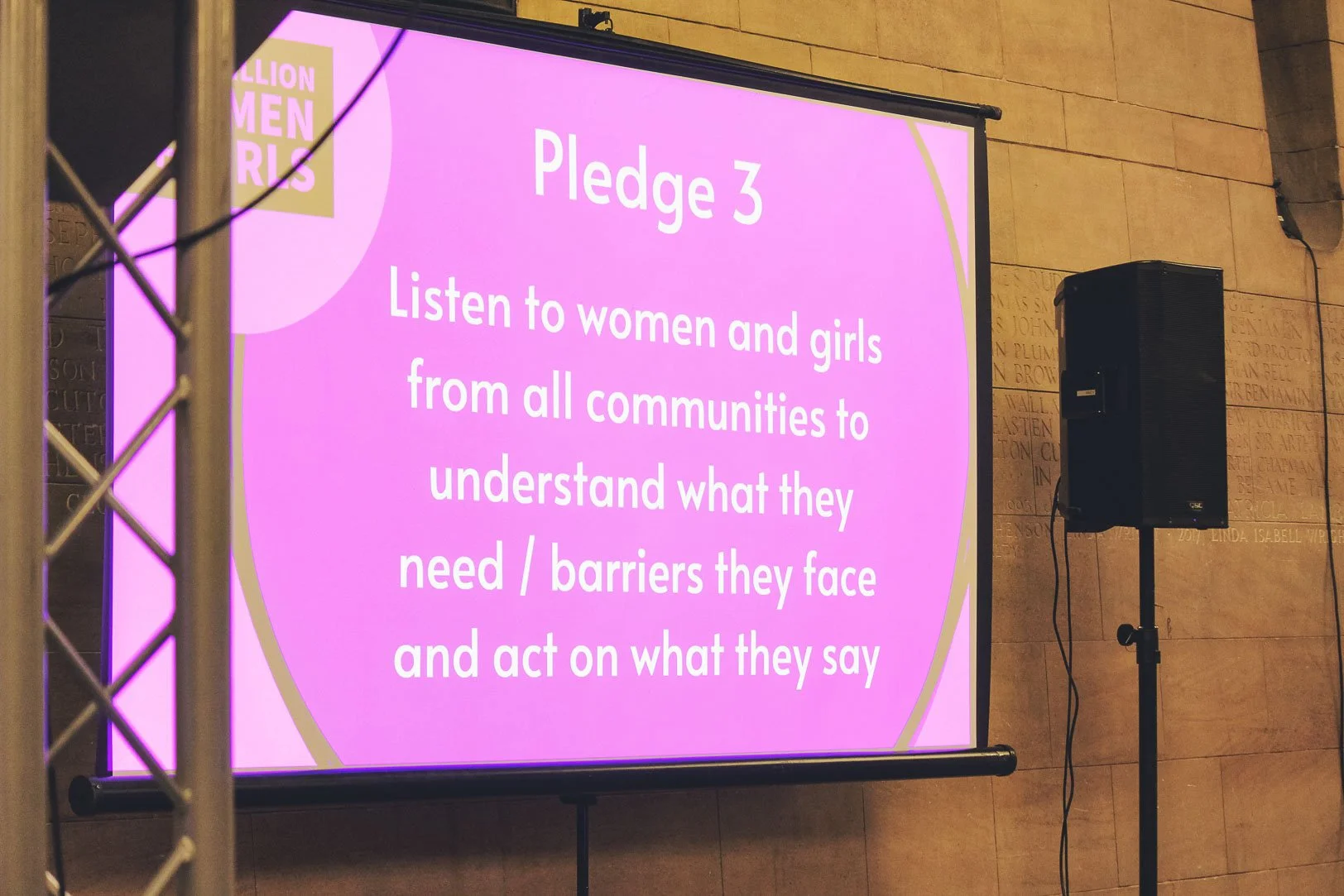
We developed a set of pledges and met with the Mayoral candidates, who each ‘pledged’ to:
Take practical steps to improve the lives of women and girls in our region.
Work with partners to ensure women and girls can access safe transport, can access housing, good quality jobs, training, and adult education.
Listen to women and girls from all communities and act on what they tell me/us to understand what they need / the barriers they face.
Put in place systems and structures to ensure equality for women and girls.
Explicitly consider the specific impact on women and girls of every policy / strategy we develop, seeking to maximize positive and mitigate negative impacts.
Four of the seven authorities (North Tyneside, Newcastle, Gateshead and Sunderland) also adopted the pledges.
We also encouraged women to vote, using social and local media, activities with local women’s groups and a Debate with all the candidates, focusing on issues that were important to women and girls.
350 people attended the Debate, with questions on areas the Combined Authority would be responsible for, giving us a sense of what women and girls were most concerned about and keeping the focus on regional rather than national issues.
After the elections we continue to work with the Mayor, the Combined Authority (now a Mayoral Strategic Authority) and the local councils to advocate for practical action to improve the lives of women and girls in our region.
In 2025 we became a not-for-profit company so we could hold funds and in 2026 we held five events in advance of key local authority elections, reaching 1,330 voters concerned about issues including women’s safety in public spaces, tackling misogyny in schools, access to housing and much more. For more information on the local election events go to: May 2026 Debates
Who We Are
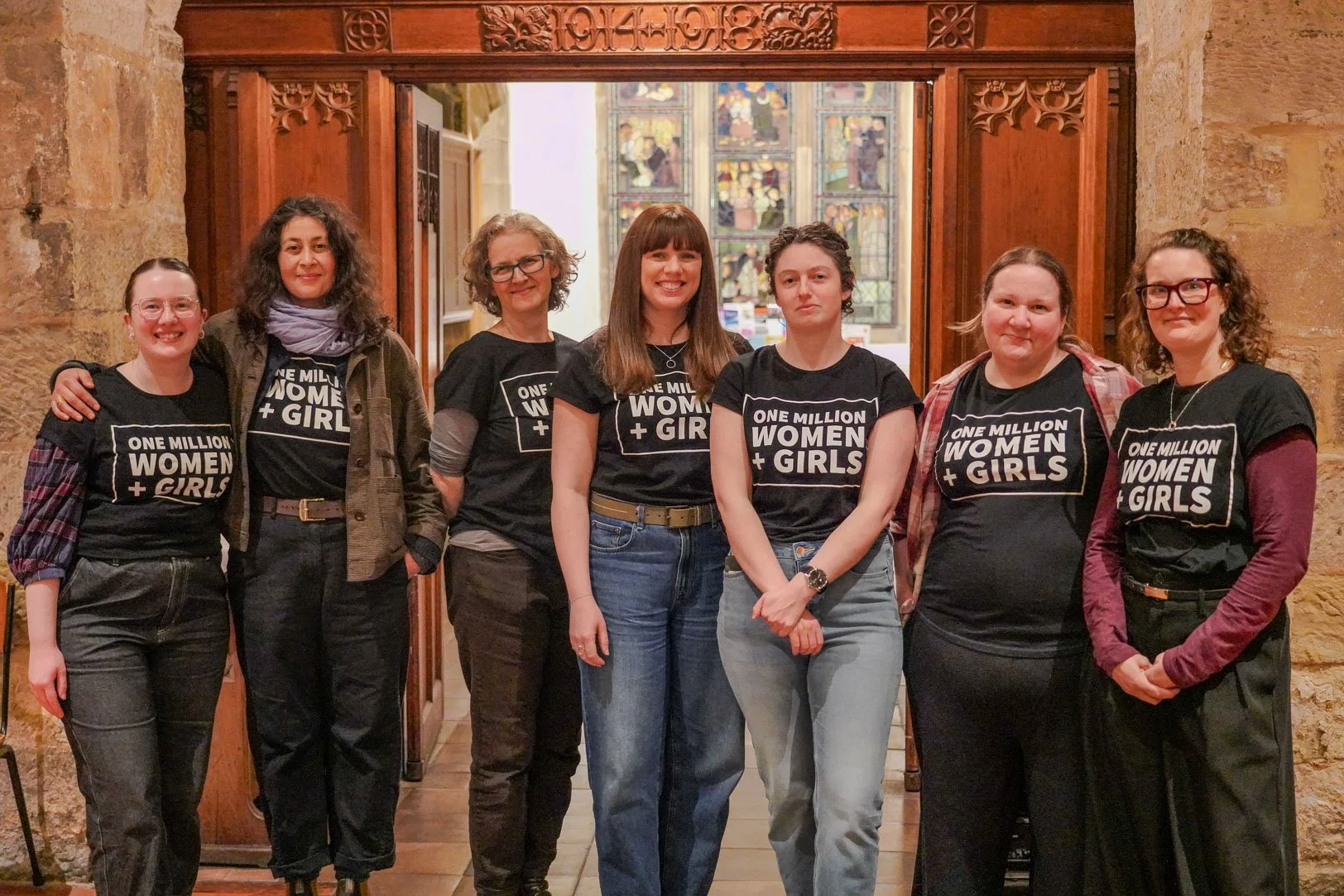
One Million Women & Girls is a campaign from a diverse group of women across the North East. We are a non-partisan organisation and do not support or endorse any politician or political party.
We are committed to ensuring women and girls fully engage in the democratic process, have their voices heard and their needs met.
We advocate taking an intersectional approach to maximising the potential of all women and girls which means listening to the lived experience of any marginalised group, including: disabled women; lesbians, bi-sexual and trans women; migrant women; older and younger women; pregnant women; racially minoritised women; working class women, and developing policy responses that meet their needs.
We are organising to bring the voices of women and girls into local and regional government and decision making processes - we invite you to join us and be heard!
-
"I joined 1MW&G because I believe we have to grab the opportunity to centre women and girls in political, social and economic developments in the North East. Some folk might think we are there already but we are still on the way. Some women and girls are more marginalised than others, which is a stark reality that should drive us all."
-
"I got involved in 1MW&G because I wanted to do something to make the world a fairer place. I recognise that my feminism comes from a place of privilege - and some luck- but I see inequality all around. I feel a responsibility to use my voice to help women and girls who haven’t had the same advantages I have. I am inspired and galvanised every time we meet; by the collective power and total resolve of the other women in this group."
-
"I’ve lived in the North East all my life and I recognise that although women and girls have come a long way here, we still have further to go. As an older woman, I want to make the North East a safe, secure and fair place for our daughters, grand-daughters and great-granddaughters. By working together and sharing our skills, we can go forwards to achieving this."
-
Women & girls and housing
-
Women & girls and the economy
-
Women & girls and transport
-
Women & girls and public health