

Who we are
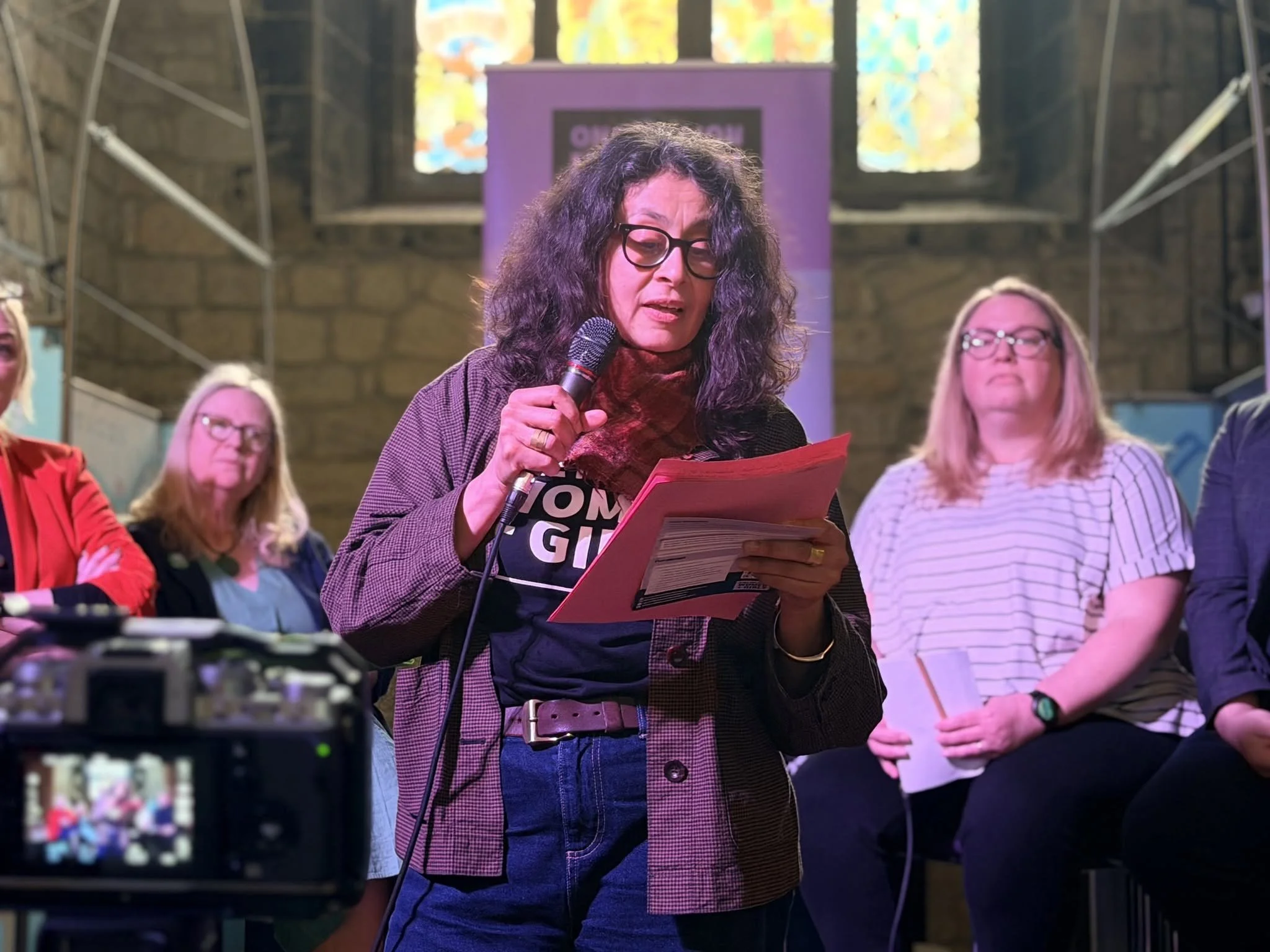
One Million Women & Girls is a campaign from a diverse group of women across the North East. We are a non-partisan organisation and do not support or endorse any politician or political party.
We believe decision-makers should listen to women and girls when making choices about public services, housing, jobs, transport and safety. Women and girls in the North East should have the same chances as everyone else to be safe, healthy and reach our full potential.
Why women and girls need to be heard
Women in the North of England live shorter lives, work more hours for less pay, are more likely to be an unpaid carer, and more likely to live in poverty than women in other regions of England.
Decision makers including local and combined authorities directly or indirectly provide a wide range of services that have a major impact on the everyday lives of women and girls, including:
education (e.g. special educational needs provision, youth services);
children’s services (e.g. child protection, youth justice);
adult social care (e.g. services for older people, people with disabilities or mental health needs, asylum seekers);
services for victims of domestic abuse and sexual violence (e.g. funding refuges and other support);
public health (e.g. preventing ill-health, planning health services); licensing (e.g. taxis, public entertainment);
transport and highways (e.g. street lighting, public transport co-ordination);
housing and homelessness;
managing leisure facilities (e.g. parks, playgrounds and sports centres);
economic and community development (e.g. skills training to get people back to work);
providing advice and support (e.g. hardship payments, council tax benefit etc).
Decision makers often assume women and men have the same needs and use public services in the same way however evidence consistently shows this is not the case.
Women & girls and housing
In the North East, 55% of families in temporary accommodation are headed by a lone mother. Women are doubly impacted by the housing crisis because they earn less on average and undertake a greater share of unpaid care work. Women make up the majority of statutory homeless people with many fleeing abuse.
“(She) spent months sofa-surfing because she was "too scared" to live in a mixed-sex hostel after a traumatic experience. "People called us the bag lady because I used to carry all my bags everywhere."
BBC report on women’s homelessness
What could your council do to help?
Your council could use the new method of counting female rough sleepers and develop services to support them. They could ensure there is enough refuge space and other vital support for all victims of domestic abuse in their area.
Women & girls and the economy
Women carry out more unpaid work (including caring for children and older people), which helps society but means they are less able to take on paid work. Fewer women are working in the North East than anywhere else in England; in 2021, 25.3% of North East women were economically inactive (compared to 20.5% of men).
“It’s harder to do that sort of thing if you have responsibilities, you need money coming in, you can’t just go and be a full time student.”
“Lots of girls feel pushed into care roles or other roles that ‘suit’ their gender.”
Represent Women: Women Skills and Employment in the North East Briefing Paper
What could your council do to help?
Your council, in partnership with the North East Combined Authority, could consult women to understand the barriers facing them (e.g. lack of affordable childcare, access to social care) and develop local solutions. It could take concrete steps to remove barriers to women and girls choosing careers in well-paid, growing sectors such as digital, energy, transport and logistics.
Women & girls and transport
Women and girls often feel unsafe when using or waiting for public transport which can limit their ability to travel for work, education and leisure. Women travel more by bus, and less by rail than men. Overall, women travel shorter distances, and are less likely to have a driving licence, take trips by car and cycle; women are more likely to travel on foot.
“A few months ago, a drunken man sat opposite me and kept putting his hands on my knee. There was no one to ask for help.”
“I wouldn't go on public transport alone after dark as I don't feel safe.”
Represent Women: Women and Public Transport briefing paper 2025
What could your council do to help?
Working with the North East Combined Authority, your council could prioritise investment in bus services, safety measures and low fares for multiple, short journeys. It could ensure bus stops and other transport hubs are well-lit, safe places and ensure all taxi drivers are vetted.
Women & girls and public health
On average women live longer than men (in the North East they will typically live 3.9 years longer), but will experience 3.3 more years of ill-health and are disproportionately impacted by poverty, caring responsibilities and domestic abuse, all of which can contribute to poor health.
“I would feel a bit stupid going into a GP surgery…saying, I've had this person control me and now my head's in a mess, but [Specialist Services] do understand and that's why they're life savers.”
Lived experience – health impacts of domestic violence
What could your council do to help?
Your council could work with partners to reduce domestic and sexual violence and abuse and improve support for survivors. They could work with girls and women to design safety features into public spaces and to remove the barriers that prevent women and girls participating in sports and leisure activities in their local area.
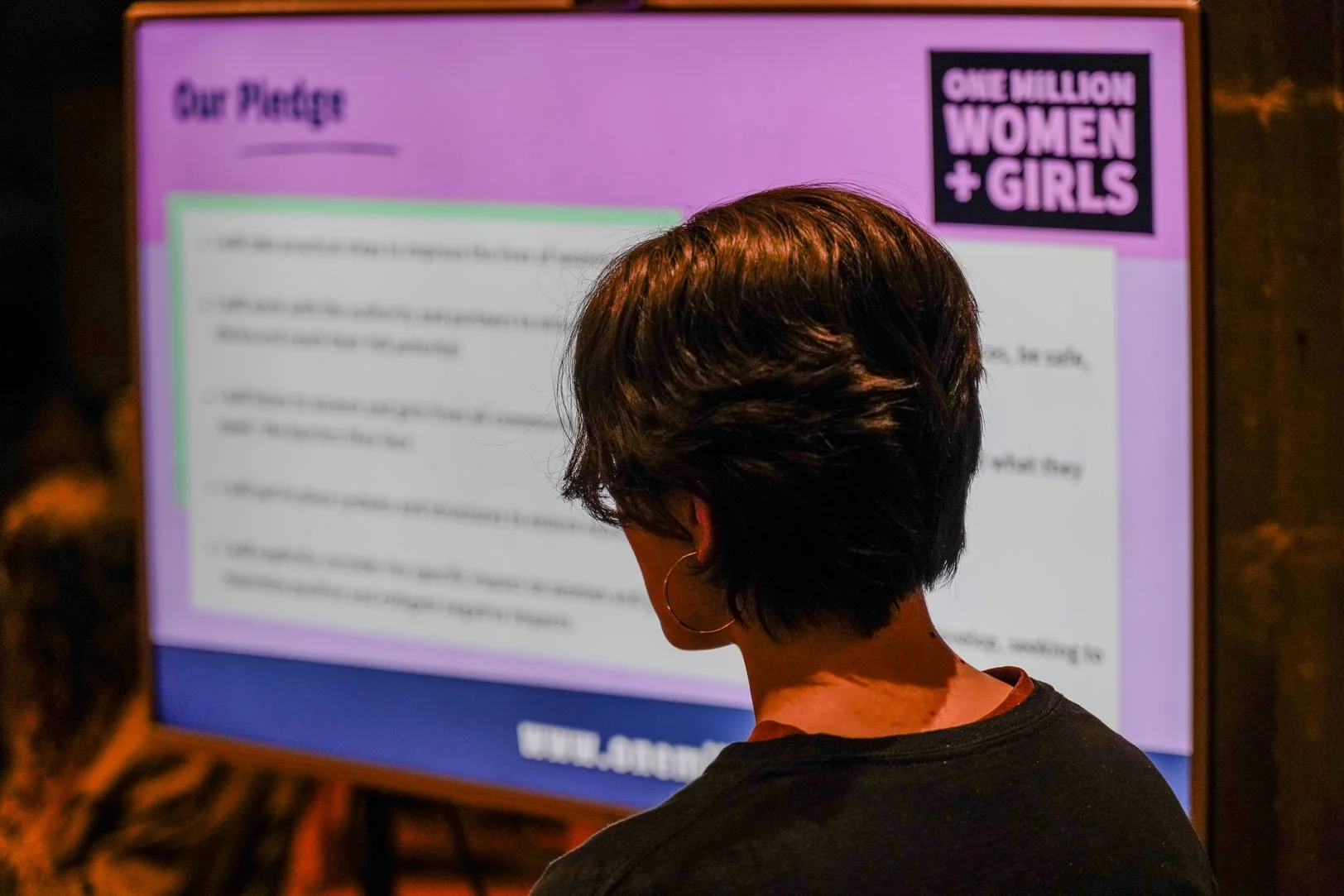
The One Million Women & Girls pledge
I will take practical steps to improve the lives of women and girls in our region
I will work with the authority and partners to ensure women and girls can access high quality services, be safe, thrive and reach their full potential
I will listen to women and girls from all communities and act on what they tell me/us to understand what they need / the barriers they face
I will put in place systems and structures to ensure equality for women and girls
I will explicitly consider the specific impact on women and girls of every policy / strategy we develop, seeking to maximize positive and mitigate negative impacts
Useful Links
Find out what elections are happening in your area, a list of candidates can also be found closer to the time: Elections in your area | Electoral Commission
Register to vote: Register to vote - GOV.UK
Check the register to ensure you are listed: Contact your electoral registration office - GOV.UK
Register to vote anonymously for safety: Voting anonymously | Electoral Commission